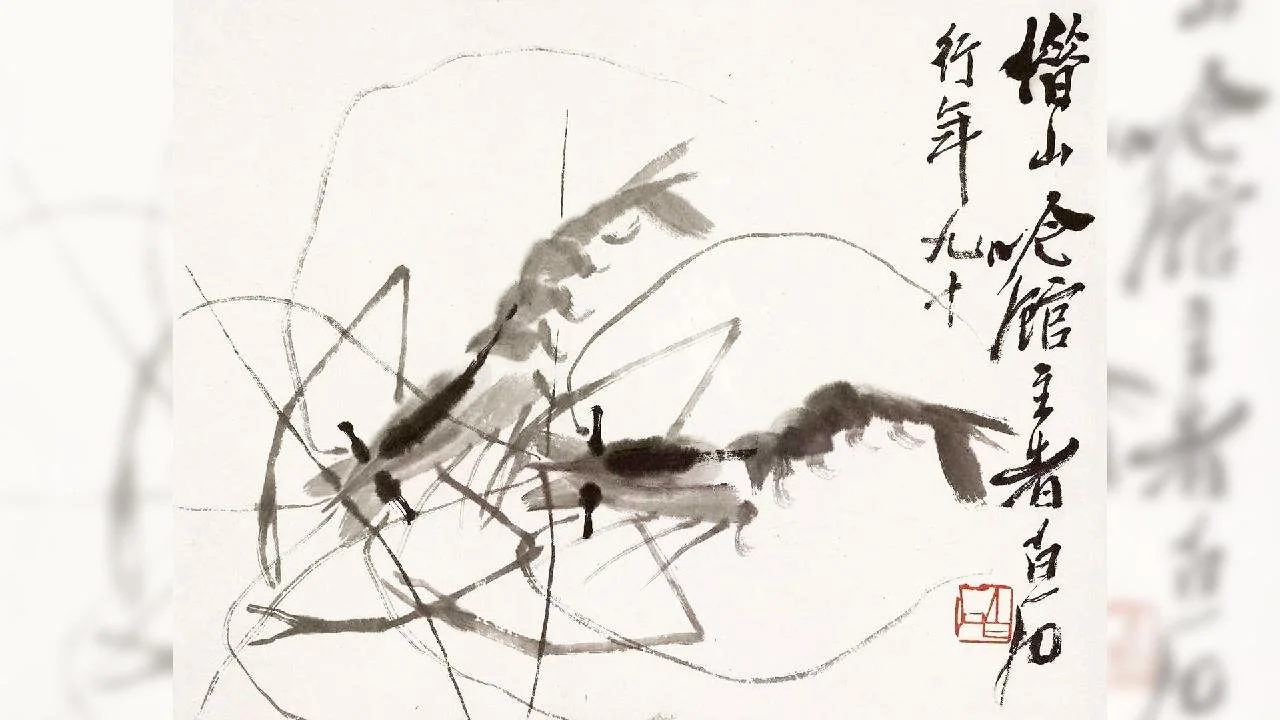
Between Scroll and Ruin: Tradition, Iconoclasm and the Making of Art in China
Imagine walking through China’s twentieth century as if it were a single exhibition. In one room, Qi Baishi’s shrimp hover in pale ink - so little pigment, and yet an entire tradition pulses in the wrist: brush pressure, empty space, the quiet confidence of forms that have survived dynasties. In the next, Dong Xiwen’s The Founding Ceremony of the Nation lifts Mao onto a bright balcony, oil paint and perspective mobilized to make history look inevitable. Turn a corner and the gallery fills with books and hanging scrolls, but Xu Bing has removed the possibility of reading: thousands of characters that resemble Chinese dissolve into pure surface, the authority of writing becoming a beautiful void. And then, abruptly, a three-frame sequence: Ai Weiwei releases a Han urn, and the past breaks on the floor.
This essay argues that art in modern and contemporary China lives in these collisions, between tradition and modernity, preservation and rupture, where aesthetics becomes a battleground for memory and power.
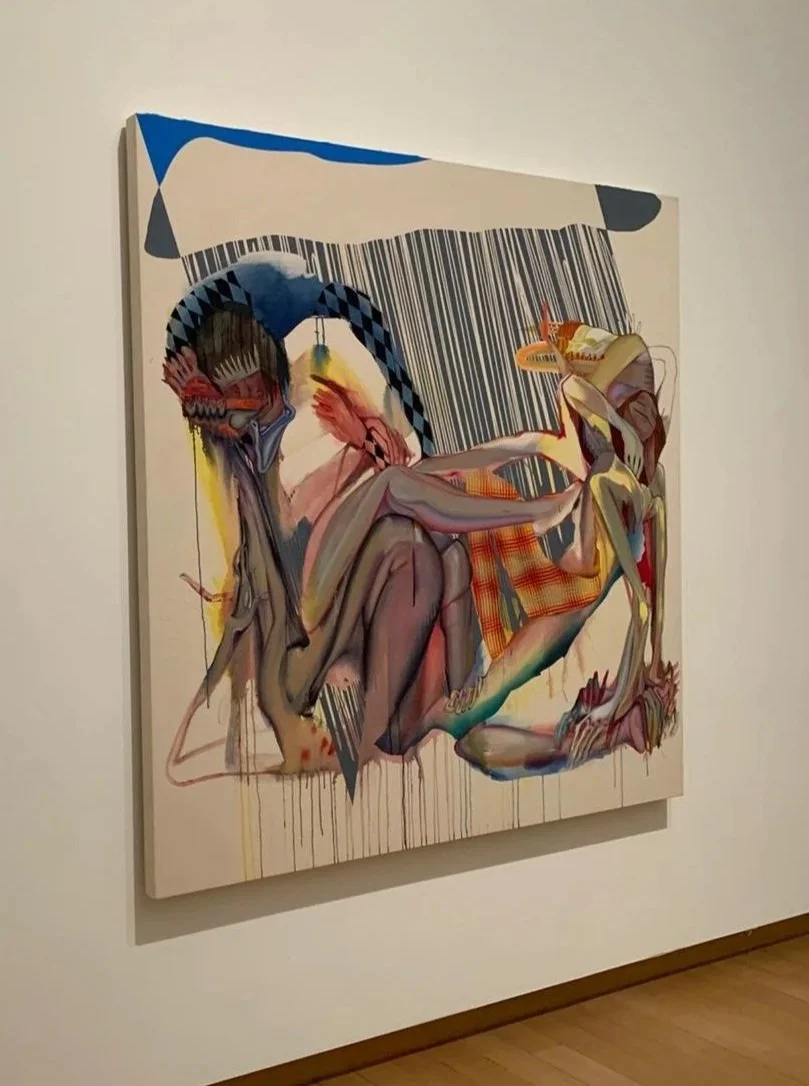
Silver Linings, Split Bodies: Standing Before Christina Quarles at the Stedelijk
In Ev’ry Silver Lining Has its Cloud (2024), Christina Quarles stages a body that will not stay still - splitting, doubling and sliding down the canvas, as if it might spill into the gallery itself. Hung almost alone on a wide white wall in the Stedelijk’s Tomorrow is a Different Day presentation, the painting turns the room into a small, uncertain stage, where identities buckle under the weight of being seen and misread at once. Rather than offering consolation, Quarles inverts the familiar proverb and leaves us with something more demanding: an invitation to linger in the in-between, where joy drags its shadows and clarity never quite arrives.
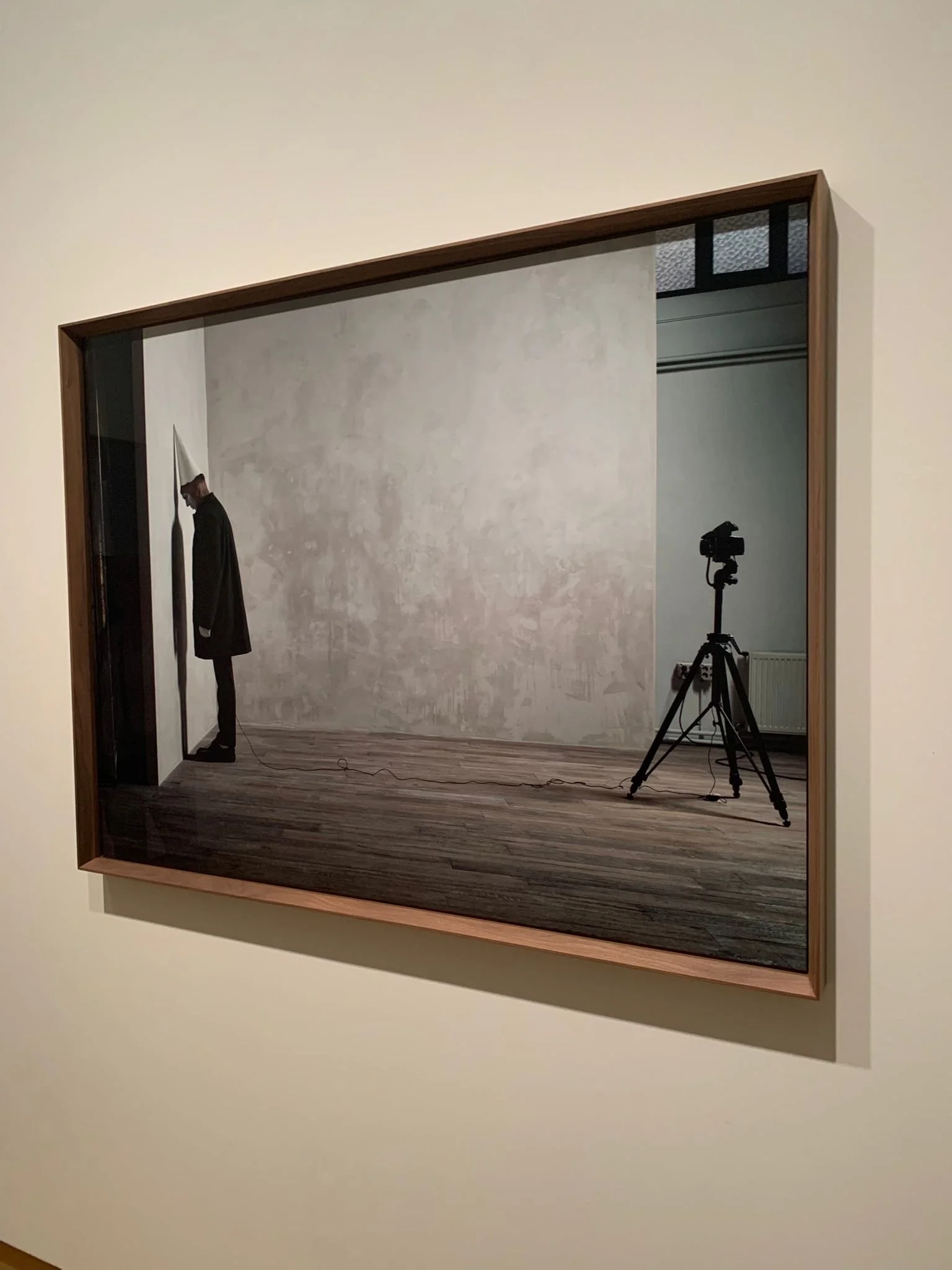
Standing in the Corner at 11:15 a.m.
At 11:15 a.m., in the soft light of an unremarkable room, a man chooses the corner and lets a camera watch him do it. Inge Meijer’s 11:15 a.m., 2020 turns a simple gesture - standing with your face to the wall, a foolish white cone on your head - into a small atlas of the year when self-discipline, isolation and performance blurred into one. Between the man and the tripod stretches a strip of empty floor, a measured distance, where shame, humour and endurance quietly negotiate who is really in control.
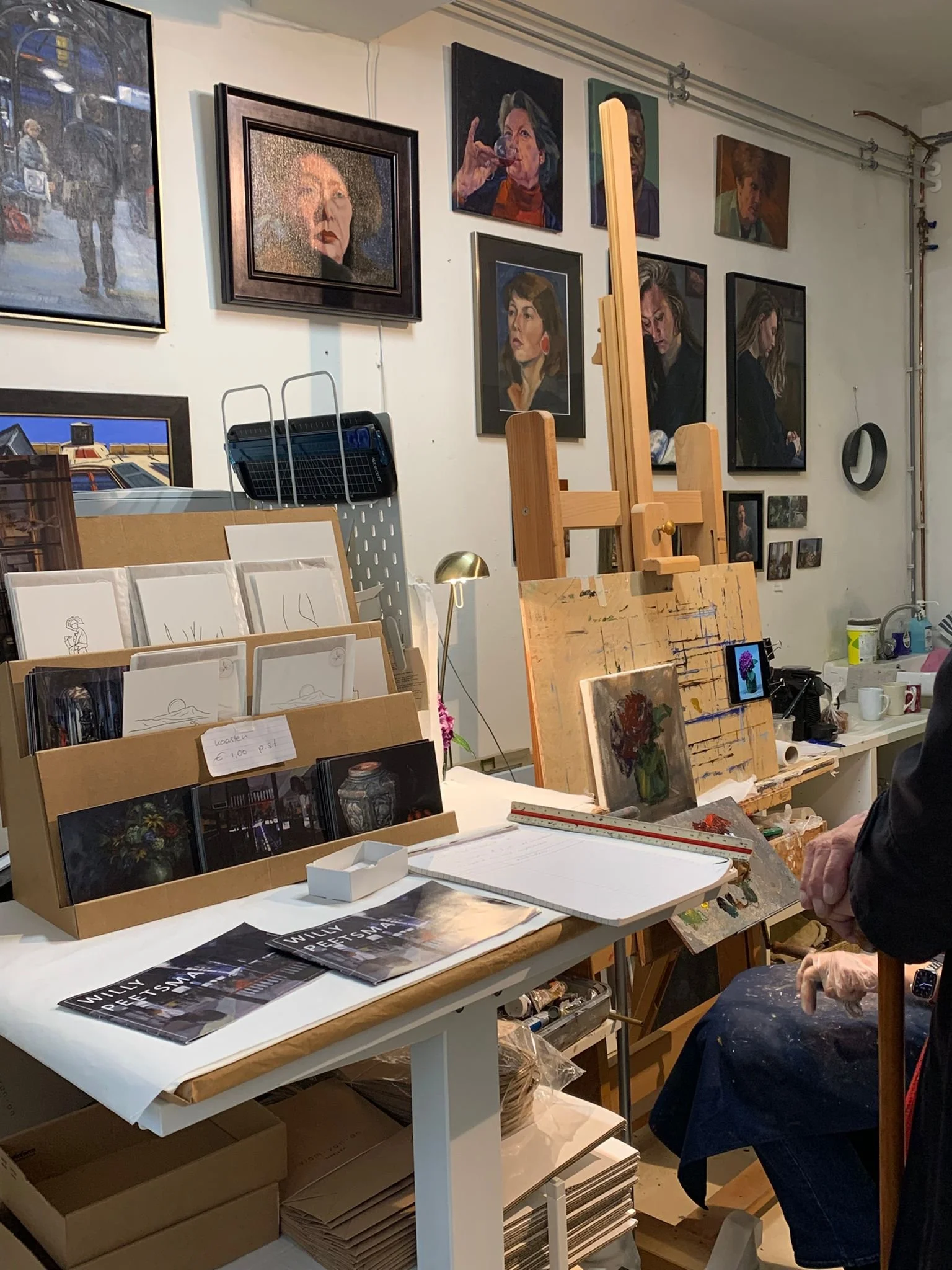
The Room Where Colour Decides Itself
Inside a small studio a painter turns quietly back to her easel, mixing colour and touching the canvas with slow confidence. Around her, portraits line the walls like silent witnesses, watching as another image begins to appear. For a moment the whole room feels like it is breathing in time with her brush.
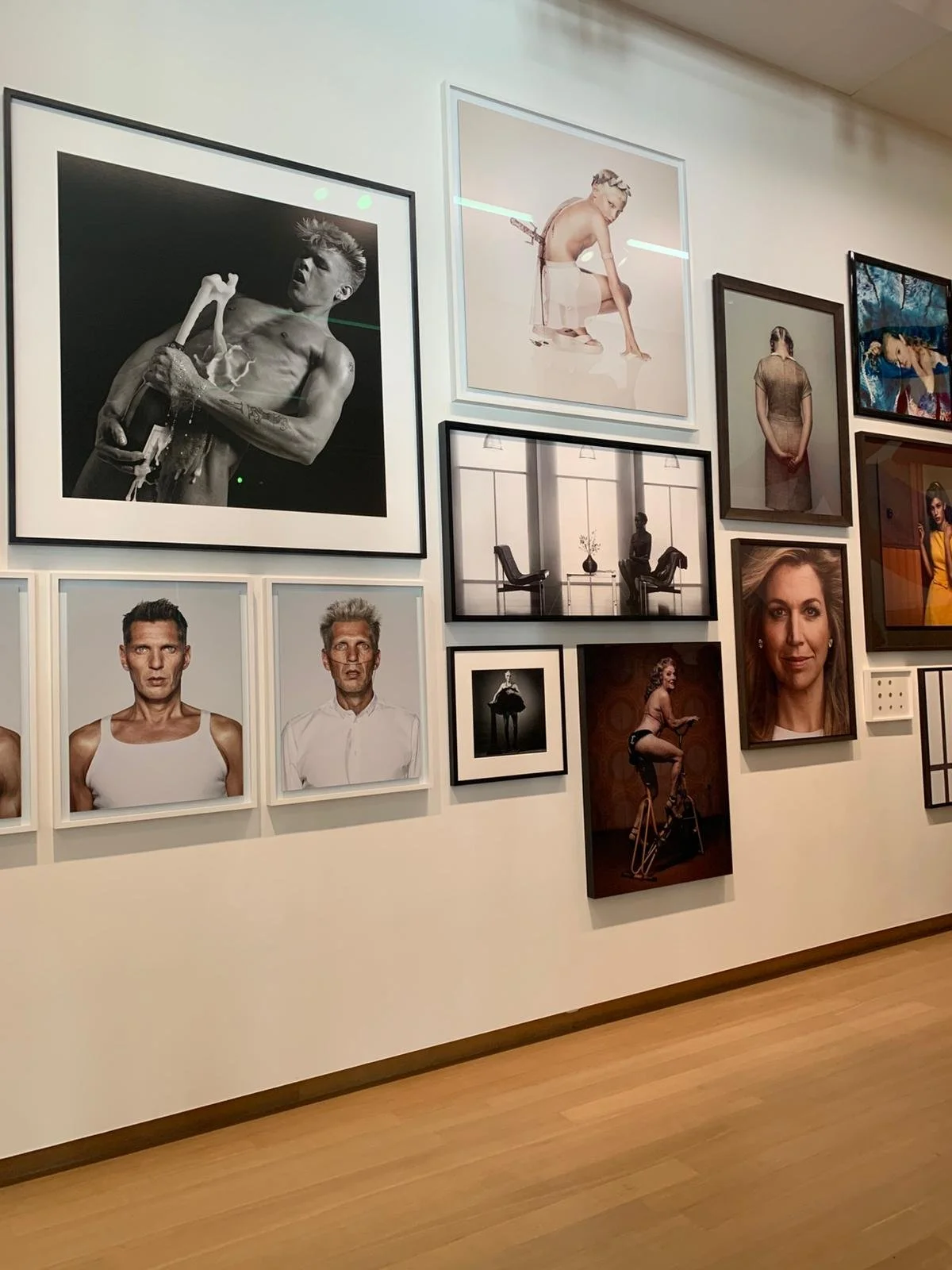
A Gallery of Carefully Broken Rules - Erwin Olaf - Learning the Shape of Freedom
The word FREEDOM is printed in clean black letters on the wall, yet nothing in Erwin Olaf’s photographs feels loose. Bodies are sculpted, faces held in careful poses, light and shadow disciplined into perfection. In this Amsterdam gallery, freedom is not a carefree state but a performance under pressure - a series of staged images, where people insist on being seen, even when it hurts.
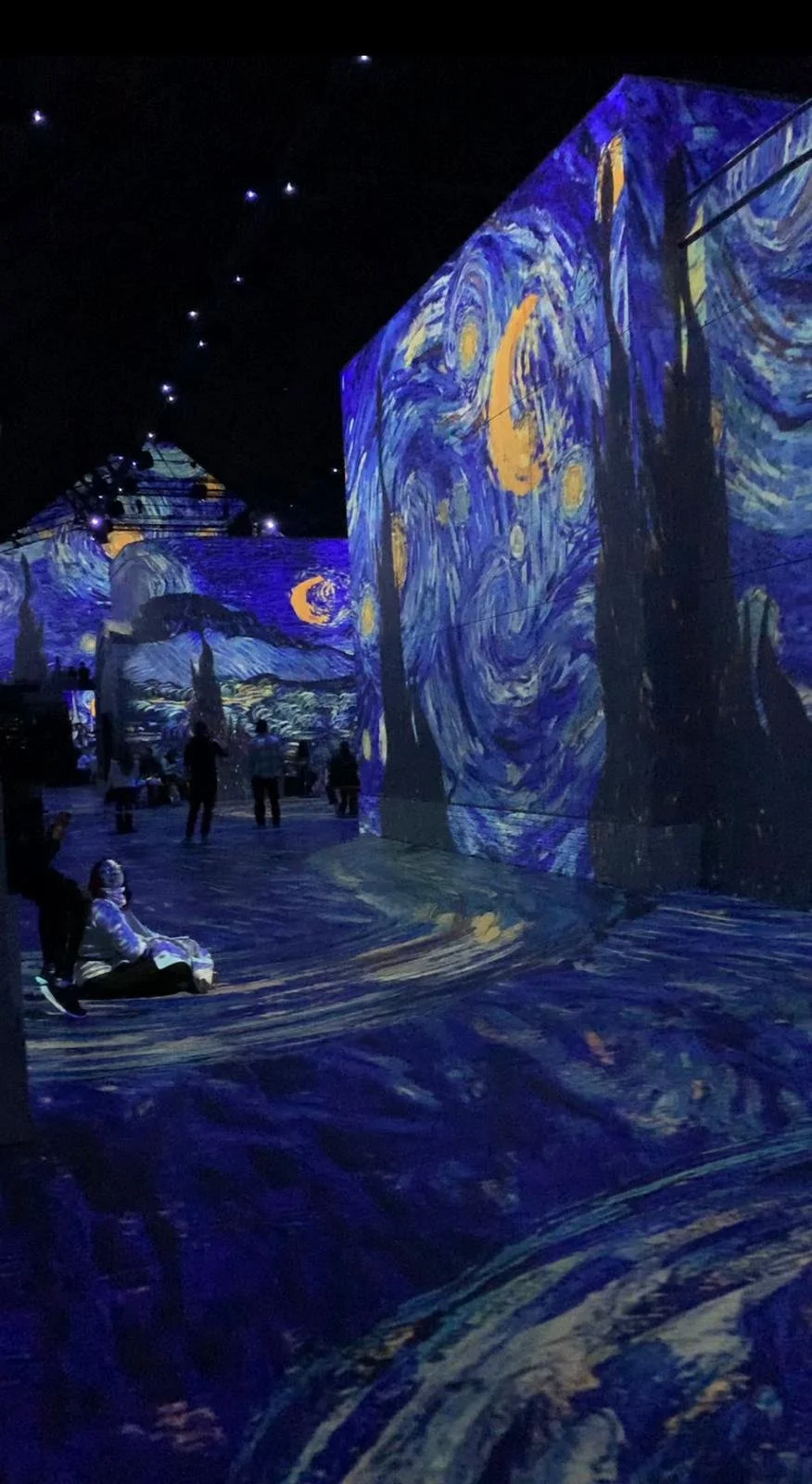
When a Painting Becomes a Room - Experiencing Van Gogh’s Starry Night at Fabrique des Lumières, Amsterdam
In a former gas factory in Amsterdam, Van Gogh’s Starry Night slips its frame and turns into an atmosphere you can walk through. Walls, floor and ceiling dissolve into swirling blues and golds, until you are no longer looking at a painting but standing inside the weather of his mind. For a few minutes, the night sky becomes a room and everyone in it a small silhouette under his restless stars.
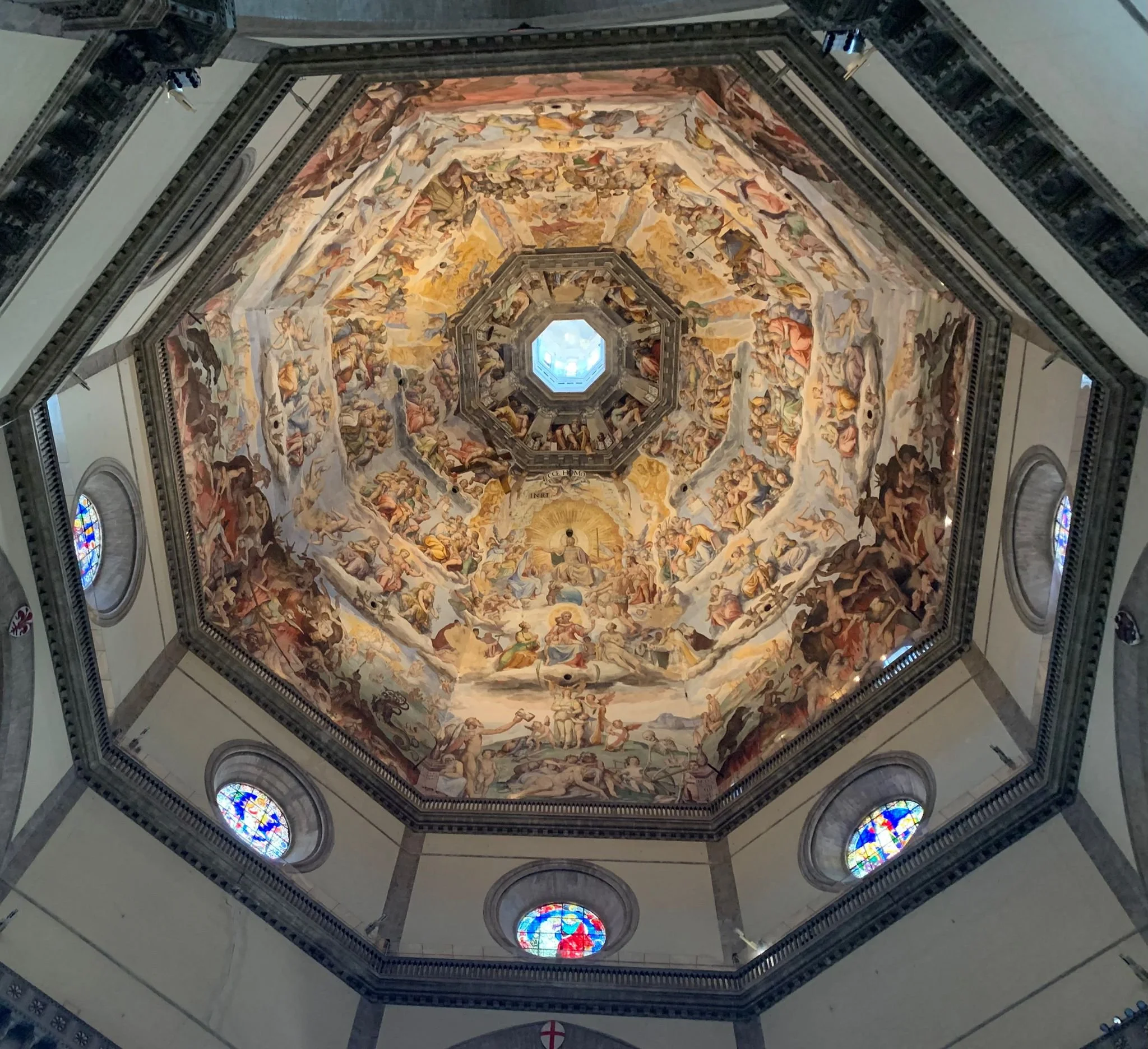
A Ceiling of Judgment, A Sky of Grace: Interpreting Vasari and Zuccari’s Last Judgment
To gaze upon this fresco is to bear witness not merely to the Last Judgment, but to the human condition itself - our frailty, our longing, our search for grace. Suspended between heaven and earth, the dome becomes both a visual sermon and a mirror of the soul. Beneath its celestial eye, we are not just spectators, but participants in a vast, unfolding drama of light, shadow and spiritual yearning.
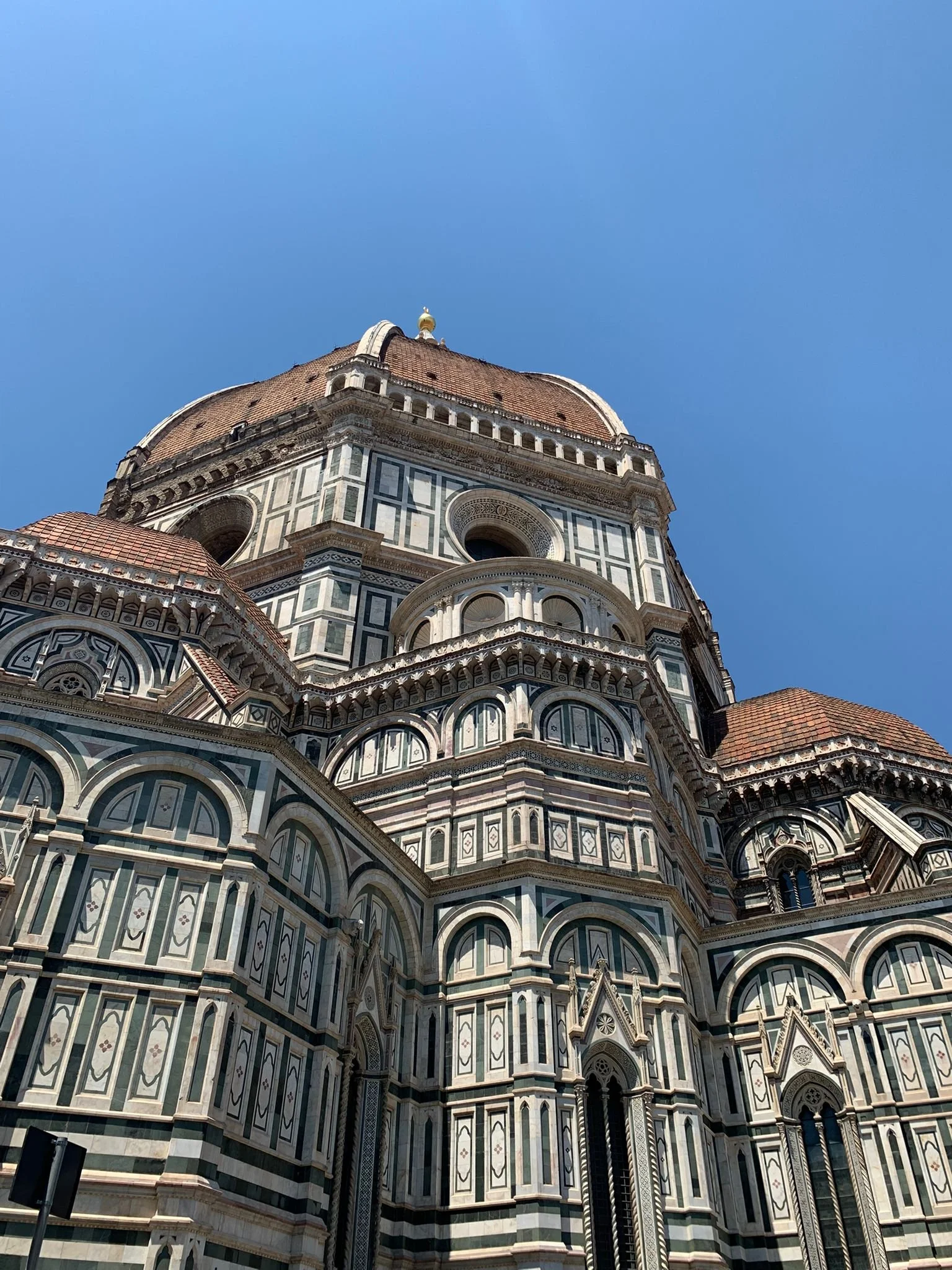
The significance of Brunelleschi's dome at Florence Cathedral
Brunelleschi’s dome at Florence Cathedral stands as a triumphant fusion of engineering ingenuity, humanist ideals and artistic vision - an enduring symbol of the Renaissance spirit and humanity’s boundless creative potential.
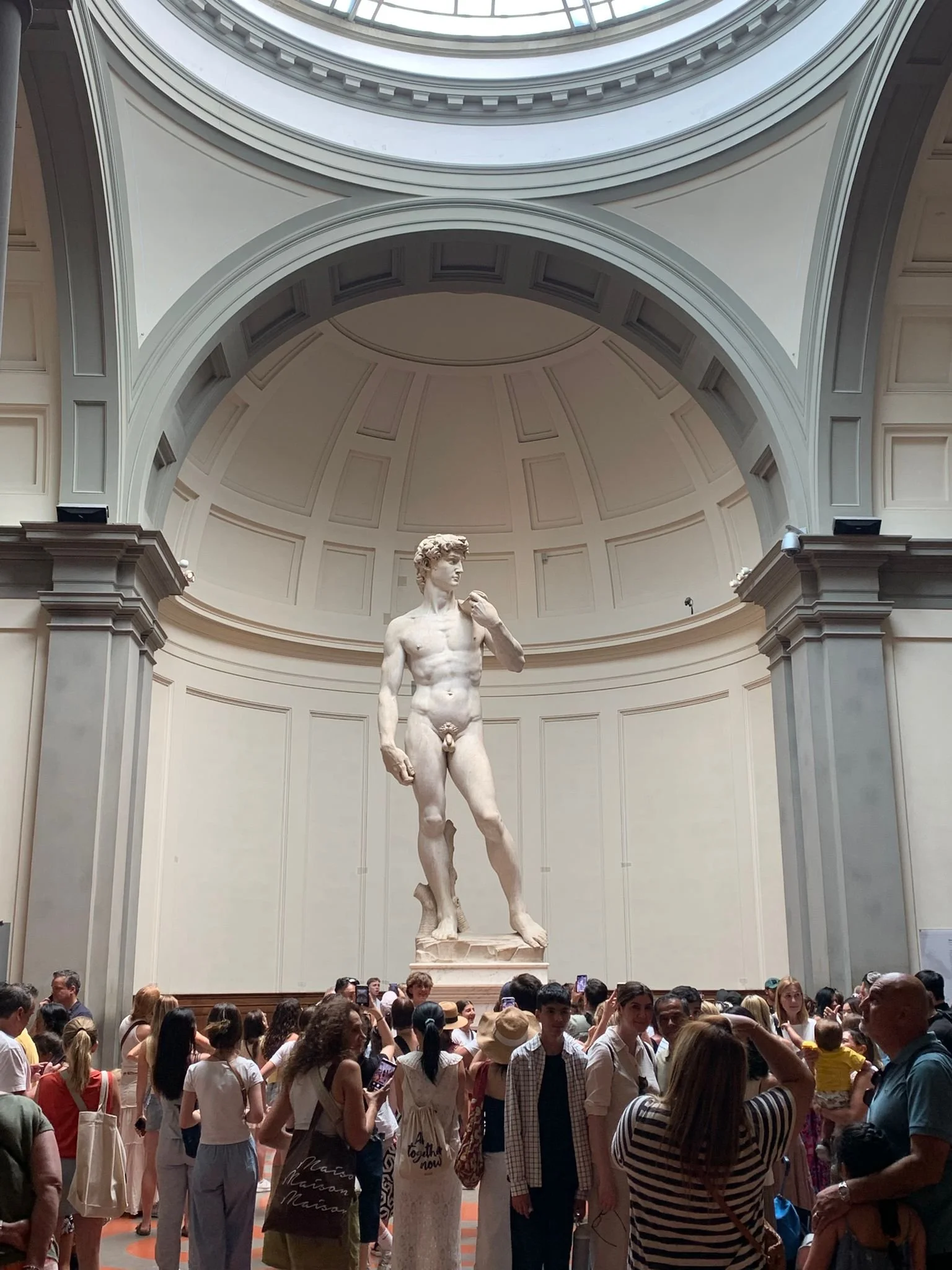
Michelangelo’s David: A Marble Symphony of Strength and Elegance
Michelangelo’s David is not merely a masterpiece of sculpture, but a profound embodiment of Renaissance ideals - uniting physical perfection, intellectual contemplation and spiritual dignity in a single, timeless moment of poised humanity.

Divine Judgment and Civic Fragility: Nicolas Poussin’s “The Plague at Ashdod”
Poussin’s The Plague at Ashdod (1630) is not just a scene, but a warning. Under a sky torn by divine wrath, a city collapses into chaos. Bodies writhe, prayers vanish and judgment descends in silence.

The Polyptych of Saint Catherine of Alexandria, Simone Martini, 1320
Exploring the Polyptych of Saint Catherine - a Gothic masterpiece where form, faith and memory intertwine.

Parco Urbano di Stampace
Here, past and present walk side by side.
In the shadow of Pisa’s ancient walls, the Parco di Stampace offers a quiet space to pause - where ivy climbs and time slows.

Arco dei Gualandi
An archway where time lingers - frescoes fading above the rhythm of the city below.